Admire the richly ornamented gateways, opulent shrine and manicured gardens of the final resting place of Mughal emperor Akbar the Great.
Sikandra is a grandiose complex famous for being the home of the tomb of Akbar the Great, the greatest Mughal leader. This glorious monument showcases a harmonious fusion of Buddhist, Christian, Hindu, Islamic and Jain art and architecture. Marvel at a collection of lavish red sandstone and marble gateways, chambers and minarets. Enjoy a moment of peace and serenity while wandering along the pathways of a tree-shaded garden.
Emperor Akbar started work on Sikandra and his own mausoleum in the early 1600s and it was completed by his son, Jehangir. Akbar’s dream was to create a blend of religious themes befitting of his well-known tolerance of spiritual beliefs. The complex takes its name from Sikandra Lodi, the former Sultan of Delhi who established the district in which it stands.
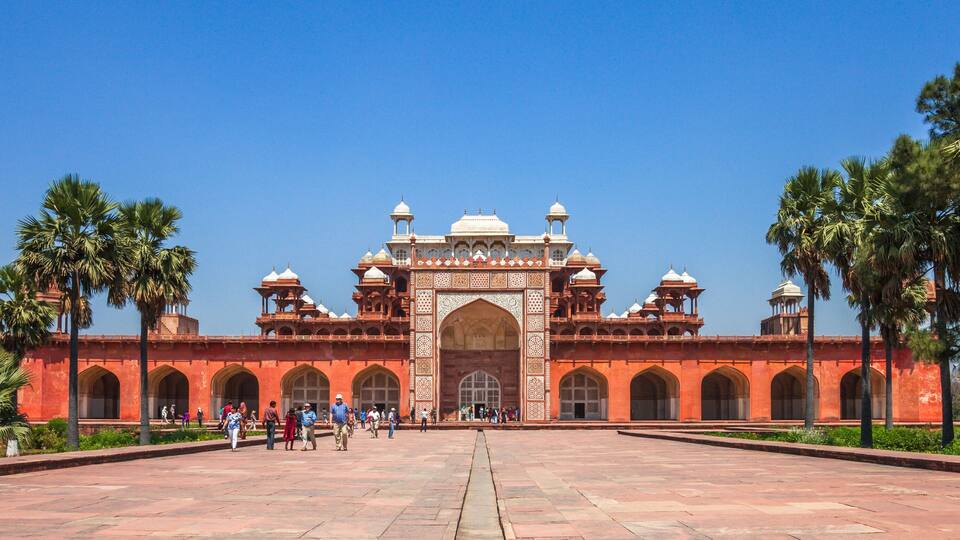
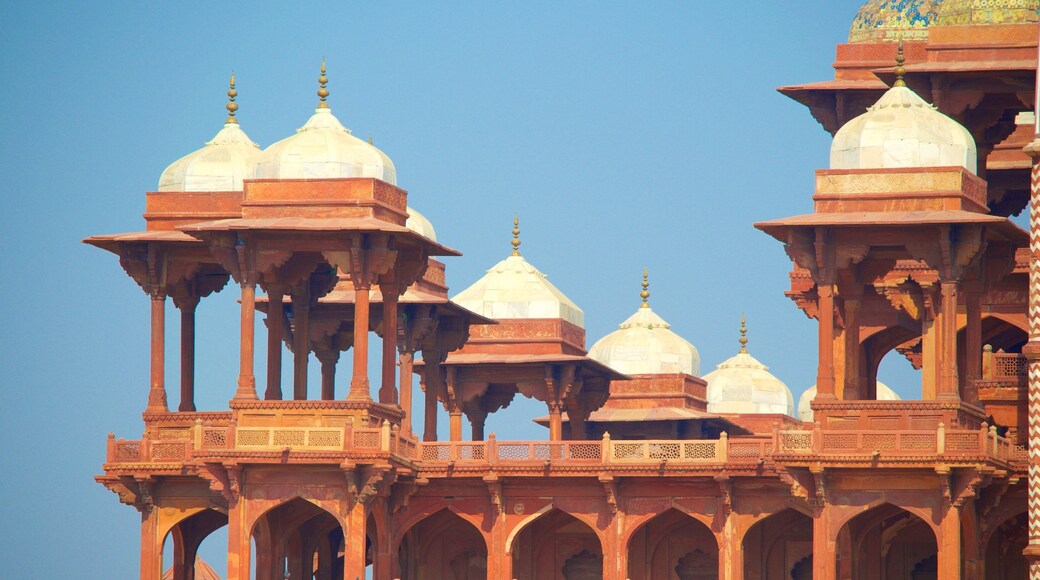
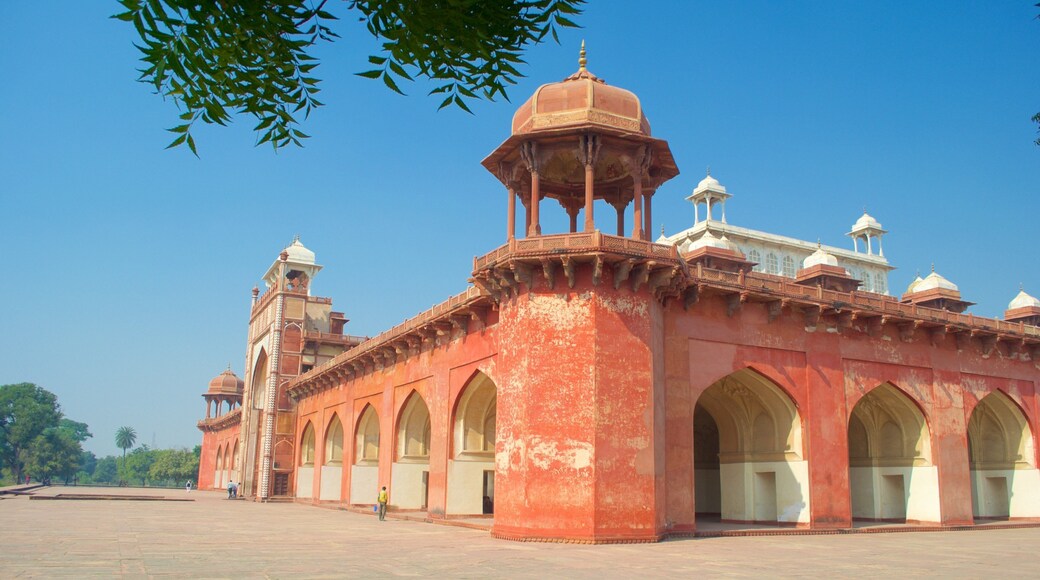
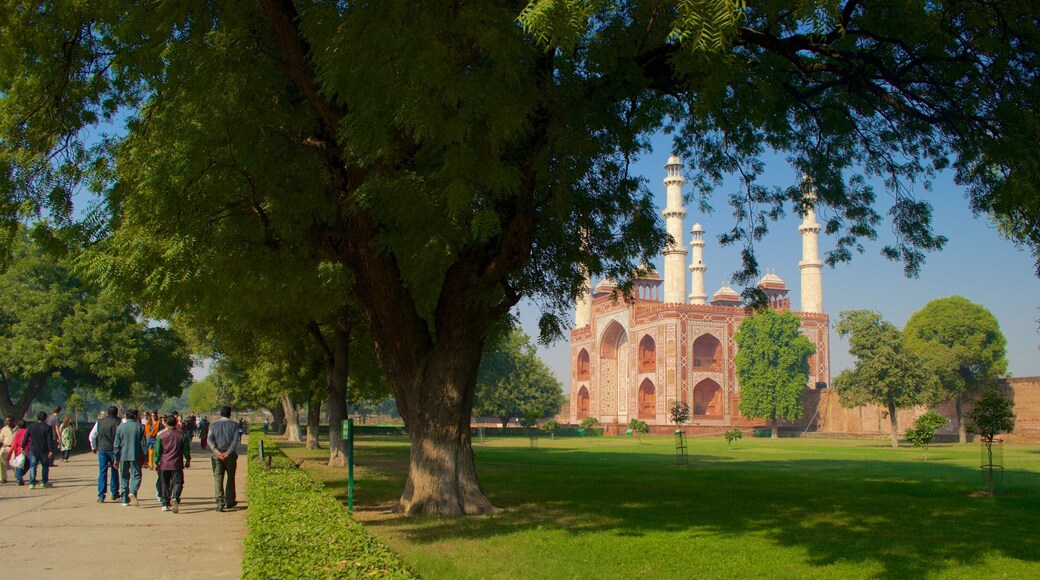
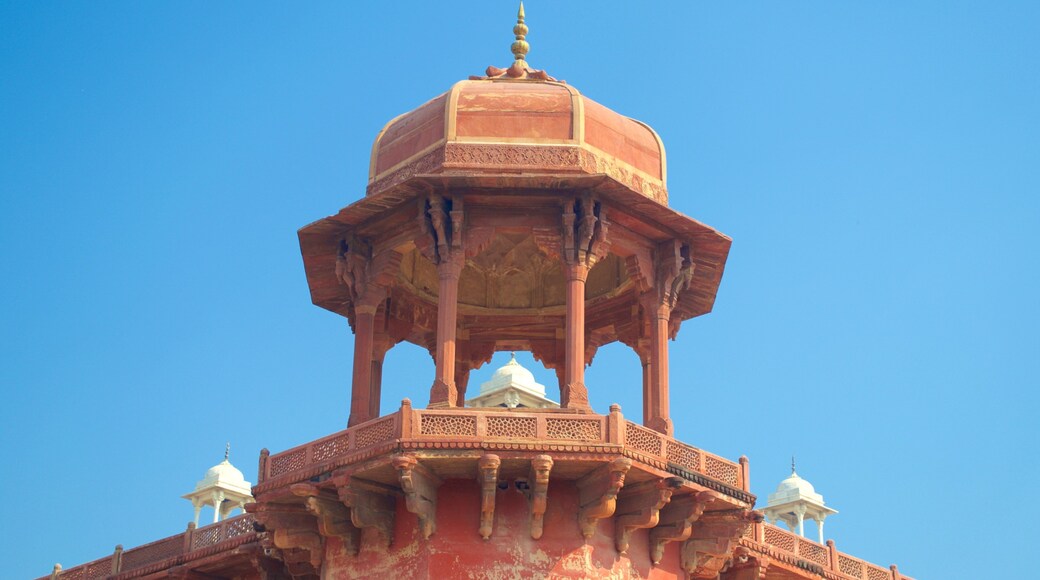
The complex has four imposing gateways, although the northern gate suffered some lightning damage. The eastern and western gates feature stucco work, mosaics and dome-shaped pavilions, called chhatri. The southern and most impressive gateway is the main entrance to the mausoleum. Note its huge central archway, intricate mosaic work and four white-marble minarets, each crowned by a chhatri.
A wide stone causeway leads from the southern gateway to the complex’s main building and Akbar’s tomb. On either side of the causeway are sprawling, tree-lined lawns. Spot deer, monkeys and peacocks. Additional pathways connect with the other gateways.
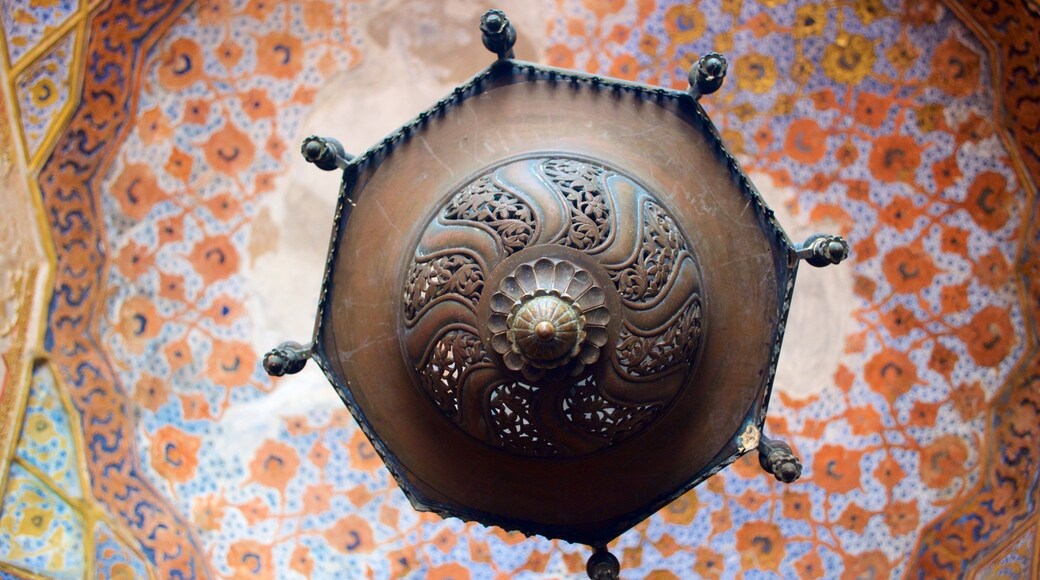
The building is a 5-tier structure that resembles the shape of a truncated pyramid. Adorning the exterior walls are huge iwans, which are vaulted halls, beautified by mosaics and semi-precious stones. Look up to see a series of chhatri and minarets. Inside, colourful floral, Arabic and calligraphic patterns festoon the hallway that connects to the Tomb of Akbar the Great. Additional chambers house the graves of Akbar’s daughters and the Mughal princess Zeb-un-Nisa.
Find the complex in the district of Sikandra, located in northwest Agra. It’s about a 30-minute drive from Agra Cantonment railway station. Get here via taxis and low-cost auto rickshaws.
Sikandra is open daily from dawn until dusk and there’s an admission fee.