

The Great Nearby: Saudi’s wonders made easy
For a country so defined by scale, it’s striking how close much of Saudi’s natural beauty and archeological heritage lies to the hum of its cities.
There is no need to cross deserts or disappear for days to find nature at its most immense. Beyond the urban edges, vast escarpments, volcanic valleys and ancient springs unfold. The landscapes may feel remote, untouched and otherwordly, yet are close enough for a single day’s adventure. From the cliffs surrounding Riyadh and the canyons of AlUla to Al-Ahsa’s shimmering palms to the pristine waters of the Red Sea, each of these places proves the same salient point: you don’t have to go far to feel far away.
Grand Panorama: Edge of the World
One of Saudi’s most striking geological formations, Jebel Fihrayn rises from the desert less than two hours northwest of Riyadh. The drive takes you through gravel plains before the final ascent to the 300-metre sheer escarpment. The Edge of the World, as it is known, is part of the Tuwaik Mountain range, a line of limestone cliffs that once bordered an ancient ocean. Standing on its edge, the widescreen view is humbling as the ground drops dramatically to the dry seabed below where seashells and fossils remain embedded in rock scored and folded like an old map. The sense of scale is difficult to grasp, an uninterrupted, unravelling horizon that delivers the kind of perspective that city life rarely allows. It’s best visited in the early morning or late afternoon when the shadows cut deep across the valley and the air is cool enough for a hike along the ridge.

Desert Escape: Red Sand Dunes
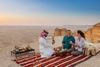
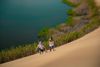
The Red Sand Dunes of Al Thumama Desert spread north of Riyadh in rolling shades of gold and rust, a palette that deepens as the sun drops low. The high dunes and sand valleys have been sculpted into soft waves by the wind over millennia. Weekenders make the pilgrimage early, scaling the tallest crests, sandboarding down slopes or simply settling in at the summit to watch the day bloom across the ridges. Despite their proximity to the capital for an easy day trip, they retain a sense of vastness, particularly at dawn when footprints have yet to mark the slopes, the color is most intense and the silence stretches into the distance.
A Stone Script: Jabal Ikmah
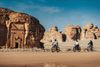
AlUla has been written about endlessly yet large parts of it remain astonishingly unspoilt. In a narrow wadi framed by ochre cliffs just outside of the oasis city, Jabal Ikmah looks like a simple sandstone outcrop until you get close enough to see the rock art, petroglyphs and inscriptions. Thousands of them, carved into the walls, dating back more than 2,000 years, in languages including Dadanite, Thamudic and Nabataean, early forms of Arabic that speak of the travelers, traders, pilgrims and poets that once gathered here and recorded their prayers, contracts and stories in the stone. It is one of AlUla’s most compelling archaeological sites. Walk through early in the morning as the light sweeps the canyon walls. The carvings emerge one by one, delicate and deliberate, reminders of how long people have been moved by this landscape.
Into Focus: Saudi
Into The Wild: Sharaan Nature Reserve
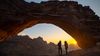
A protected reserve of 1,500 square kilometers of rust red canyons, cliffs, acacia-dotted plateaus and hidden valleys, Sharaan is AlUla’s most pristine wilderness, 45 minutes’ drive from its Old Town. Designated a protected area in 2019, it provides sanctuary to Arabian ibex, mountain gazelles, red foxes and the Arabian oryx, recently reintroduced into the ecosystem. The reserve combines conservation and accessibility - guided drives and walking trails reveal sandstone arches, rare flora and shifting sunlight and shadows that turn each hour into a different painting. It captures Saudi’s wild beauty, carefully preserved for the future but open to explore today. The much-anticipated Sharaan Resort, designed by Jean Nouvel and carved directly into the rock, will bring a new kind of attraction, but for now, the drama belongs to the landscape.
Living Oasis: Al-Ahsa
A shimmering expanse of life in the desert, Al-Ahsa Oasis is a UNESCO World Heritage site and stretching across 30,000 acres it is the largest oasis in the world. A fertile expanse of more than 2.5 million sweet date palms rises from the Eastern Province’s golden plains, two hours south of Dammam. The 280 natural freshwater springs bubble up from the earth, mineral-rich and soothing; their waters, channeled into irrigation canals, have sustained human settlement and agriculture here for more than 5,000 years, making Al-Ahsa one of the oldest continuously inhabited landscapes in the region. Stroll through shaded groves, visit the 16th-century Qasr Ibrahim fort, and step inside the extraordinary Al Qarah caverns, whose honeycombed limestone chambers stay relatively cool year-round. This is desert life reimagined, sustainable, abundant and deeply rooted in history.
Red Sea Reverie: Bayada Island
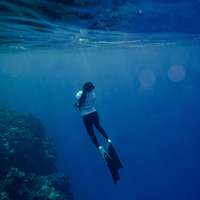
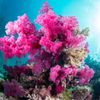
Just 40 minutes off Jeddah’s shoreline, Bayada Island stands as one of Saudi’s most captivating marine escapes, an unspoiled strip of white sand anchored in turquoise shallows, surrounded by technicolor reefs. There is nothing but the essentials: a boat, the sea and a wide-open sky. Visitors let the rhythm of the waves dictate the day. The warm water is a divers’ and snorkelers’ paradise where tropical fish flash like silver sparks and turtles glide past coral gardens in the untouched reef system. Under careful environmental protection, pristine Bayada balances adventure with preservation, proving that nature, left to its own devices, can be the ultimate luxury.

Issy von Simson is a travel writer and the former editor of Condé Nast Traveller magazine, specialising in hotels, wellness and family adventures with her four children in tow.
Hotel deals in Jeddah

Go further with the Expedia app
