
Into Focus: Saudi
On a journey that spanned Jeddah’s creative streets, Riyadh’s futuristic cityscape, the Saudi Red Sea’s pristine reefs and the heritage of AlUla, photographer Holly-Marie Cato captures the spirit of Saudi one frame at a time.
The largest country on the Arabian Peninsula, home to ancient ruins and millennia-old tombs, Saudi has deep historic roots. But this is a country of contrast, with bustling cosmopolitan art and dining scenes, forward-facing design and architecture and ambitions to build the world’s tallest skyscraper.
London based Holly-Marie Cato has worked across Morocco and shot a documentary in Jordan, heard friends describe trips to Mecca, but Saudi itself remained unfamiliar. Curiosity pulled her in.
![Locals keen to tell Holly-Marie their stories [Photo courtesy of Holly-Marie Cato]](https://cdn.sanity.io/images/nxpteyfv/media-studio/81a89fab0be859b565e3d2efc056c5ee714570a8-2425x3037.jpg?fp-x=0.5&fp-y=0.5&w=100&fit=max&auto=format)
A thousand welcomes
“I felt openness everywhere,” exclaimed Holly-Marie. On the streets, in the markets, people were eager to chat, pose for photos and draw her into conversations.
As a portrait photographer, Holly-Marie is used to mixed reactions from strangers, the occasional wary glance or gentle refusal.
In Saudi, it was the opposite.
“I carried my Instax camera - as I always do - so I could gift the first photograph I took. That simple exchange transforms the moment. Suddenly, you’re not taking; you’re giving.” And from that point, every request for a picture was met with an easy, bright-eyed yes.
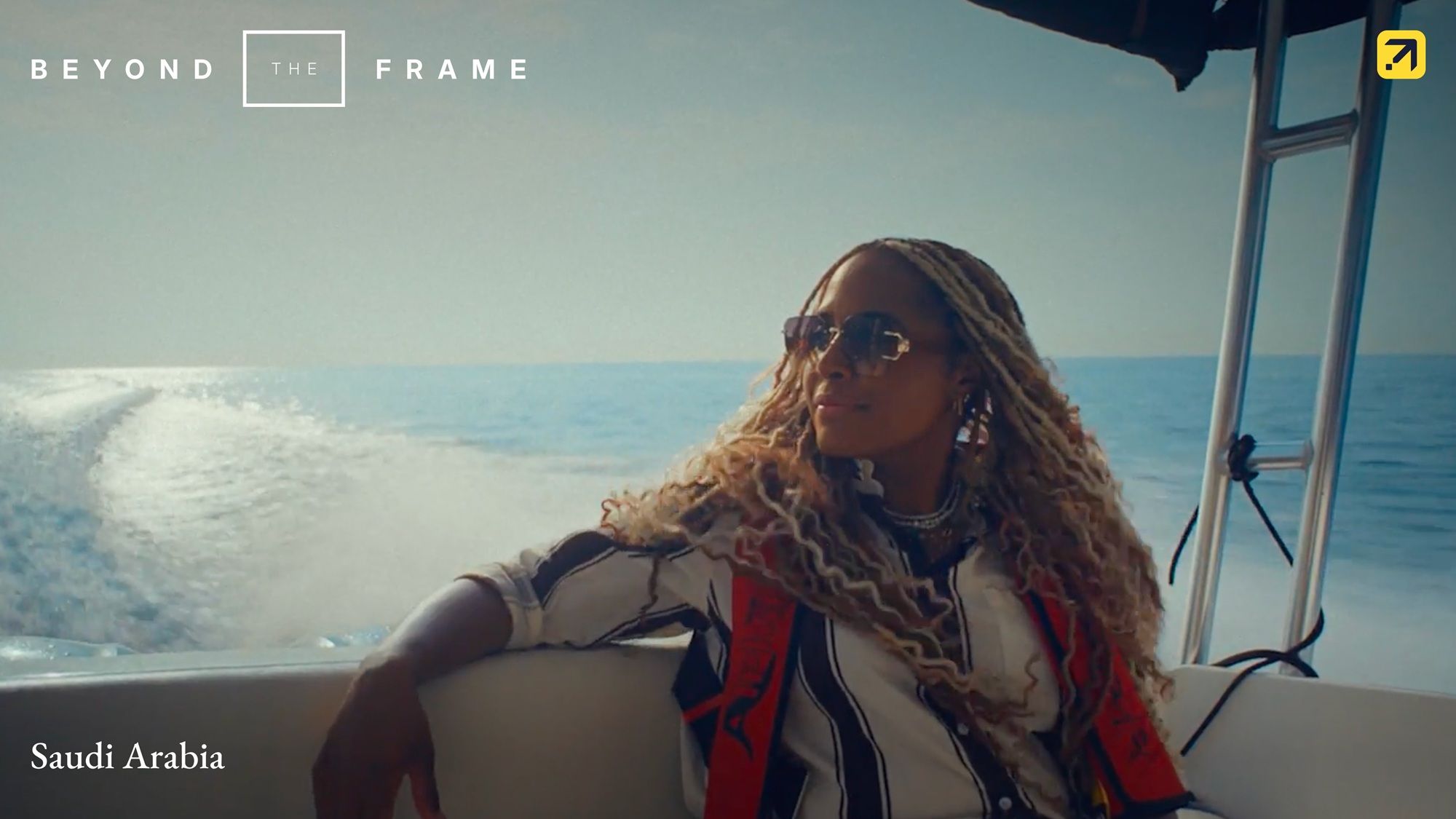
Saudi: Culture in Motion
A Shifting City
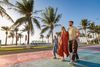
Holly-Marie fell for Jeddah fast. “It’s its own place. It has its own fabric, its own feeling.” By the ocean, it felt to her like Los Angeles, with the relaxed atmosphere and people cycling along the boardwalks. At sunset, as the temperature cooled, the restaurants started to fill up. Ever with her photographer’s lens, Holly-Marie was captivated by the fading light. “You’ve got this blue hour where it’s almost night but there’s still the glow from the horizon. It’s so beautiful.”
By contrast, the soul of the city is in Historic Jeddah, the UNESCO World Heritage old town, where ornate wooden balconies lean over narrow alleys like elders deep in conversation. Craftsmanship can be seen on every corner: one shop making handmade soap and perfume; another, jewel-like textiles. Holly-Marie met Nohar and Hassan, two artisans reviving centuries-old woodworking traditions. They transformed teak into trays, carving motifs that echoed the ancient balconies above them. “For a woman to have that craft, you know, and now they’re teaching it to other people, I thought that was quite beautiful.”
In the market, Holly-Marie was caught up in a whirl of saffron, cardamom and cloves. Vendors encouraged her to stop, to sit down, to drink their coffee. “I thought London knew coffee,” Holly-Marie laughed. “I thought Italy knew coffee. But in Jeddah, I had the best Americano of my life.” [and it was in Saudi’s traditional coffee served] in those tiny half-filled cups, Holly-Marie began to understand, “No one’s in a rush. There’s a wonderful pace to life here.”
![Freediving in the extraordinarily clear water of the Saudi Red Sea [Photo courtesy of Holly-Marie Cato]](https://cdn.sanity.io/images/nxpteyfv/media-studio/fc73c316b99be57e58903cd121d1129dd51ad052-5249x7870.jpg?fp-x=0.5&fp-y=0.5&w=100&fit=max&auto=format)
A technicolor odyssey
From the city Holly-Marie traveled outward on a small boat slicing over the Saudi Red Sea. Leaving land felt ceremonial, a transition into a slower rhythm. “You feel like you’re entering somewhere special… you’re on your own adventure,” she explained.
She was intrigued about why it was called the Saudi Red Sea. Mo, a producer on the trip said that when he was a boy, all the coral glowed red beneath the surface. But the sea is a museum of all colors: purples, aquamarines, sunburst oranges and greens. The corals form incredible sculptural shapes and habitats - caves, arches, little alleyways teeming with reef fish. Along this stretch of coast, dedicated conservation efforts are protecting the vibrant reefs and marine life, ensuring the underwater ecosystem thrives for generations to come.“I’ve snorkeled many times”, explained Holly-Marie “but I’ve never seen anything like it.” It was here that she photographed underwater for the first time, alongside Shaykhah, a free diver who moved through the water like she belonged to it.
A Vision in Action
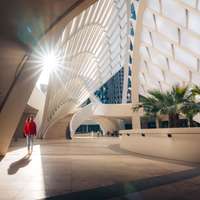
Riyadh stunned Holly-Marie with its futuristic ambition. Amid the clean lines of the financial district, the King Abdullah Financial District (KAFD) Metro Station, designed by the late Zaha Hadid, stopped Holly-Marie in her tracks. “From the outside, its aquatic bulbous shape felt almost alive amongst all the rigid buildings.” Inside, the sci-fi-like atrium struck her as otherworldly - warm, organic, almost womb-like - with an Alexander Calder sculpture turning in slow motion. She remembers thinking, “How is this here? How did this place become a canvas for the world’s most imaginative architects?”
![The KAFD metro showcases architect Zaha Hadid’s visionary designs [Photo courtesy of Holly-Marie Cato]](https://cdn.sanity.io/images/nxpteyfv/media-studio/d1783781581bb188c2146113bca3ada8aca6c0db-6000x4000.jpg?fp-x=0.5&fp-y=0.5&w=100&fit=max&auto=format)
![A road trip adventure through the landscape of AlUla [Photo courtesy of Holly-Marie Cato]](https://cdn.sanity.io/images/nxpteyfv/media-studio/b3d3bf7efc59eb675bb8aad0158c6675345e6bfd-6000x4000.jpg?fp-x=0.5&fp-y=0.5&w=100&fit=max&auto=format)
Ancient Compass
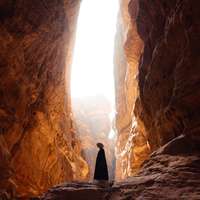
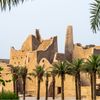
Diriyah, the birthplace of the Saudi state, on the outskirts of Riyadh, is a striking testament to the history of the country. Restored and revived, its architecture echoes life from centuries past. For Holly-Marie though, nothing compared to AlUla. Like Diriyah, the old town was exceptionally well preserved, but it was the desert that transformed her understanding of the country. When her guide Omar told her that Al-Gharameel, where they were heading to, is described by some as the “darkest place on Earth,” Holly-Marie didn’t quite believe it, until the Milky Way flooded the sky. He pointed out constellations and told her the Saudi names for the stars that had been used for thousands of years to navigate across the sand.
"I felt welcomed - clearly a foreigner, clearly invited to enjoy myself."
A Place That Says Come In
What stayed with Holly-Marie most was the generosity. Everywhere, coffee and dates freely offered, conversations started, doors held wide. “I’m a Black woman with blonde hair, no headscarf, and not once did I feel pressure to fit in. I felt welcomed - clearly a foreigner, clearly invited to enjoy myself.” That’s the heart of Saudi right now: a place eager to share itself, ready to be known and deeply grounded in hospitality that feels ancient, instinctive and sincere.
“I arrived knowing very little. I left feeling like I’d been embraced - by cities, by people, by the desert night itself.”
The Great Nearby: Saudi’s wonders made easy
Can’t-Miss Saudi Highlights

Issy von Simson is a travel writer and the former editor of Condé Nast Traveller magazine, specialising in hotels, wellness and family adventures with her four children in tow.
Places to stay
Saudi
Go further with the Expedia app
