
Saudi: Culture in Motion
Saudi’s creative energy is on the rise – seen in its bold architecture, homegrown design and flourishing arts scene. From warehouse galleries to sustainable landmarks in the desert, step into a culture accelerating toward what’s next.
The cultural compass has shifted in the past few years. Across Saudi, a new conversation is taking place, one of restoration and invention. Historic quarters are being revived with architectural precision, art spaces are drawing global attention and regenerative resorts are setting fresh standards for luxury travel. Below are three locations leading that charge, where heritage, creativity and sustainability intersect to shape the country’s next chapter. Walk along Diriyah’s sunlit alleys, stand beneath Ithra’s sculpted form, breathe the salt air along the Saudi Red Sea coast and you feel it immediately: the sense of a destination commanding its own future.
Old Soul, New Story: Diriyah
On the outskirts of Riyadh, Diriyah has been reimagined, mudbrick by mudbrick. The seat of the first Saudi state in the 18th century on the banks of Wadi Hanifah brought back to life. At its center lies At-Turaif, a UNESCO World Heritage Site that stands as a living museum of traditional Najdi architecture. Walls the color of sand, carved wooden doors darkened by time, alleys leading to courtyards where families once gathered. Guided tours around Salwa Palace and the Diriyah Museum reveal how this former capital became the foundation of the modern Saudi state. Exhibits of artefacts and handicrafts document life here three centuries ago, grounding visitors in the roots of the nation.
But Diriyah embraces reinvention too. The JAX District has led the transformation of an industrial heritage site into a creative hub. Its repurposed white warehouses now house studios, galleries and experimental venues where influential names including Ahmed Mater and multidisciplinary visual artist Muhannad Shono work alongside rising local talent. The Diriyah Biennale Foundation alternates between contemporary and Islamic art showcases, while SAMoCA (the Saudi Museum of Contemporary Art) and Diriyah Art Futures - the first museum in the Gulf dedicated entirely to digital art - explore how technology and tradition can converge.
When the sun dips behind the wadi, the energy shifts to Bujairi Terrace, a pedestrianized village of restaurants, shops and lantern-lit, palm-lined avenues. Here heritage meets haute cuisine with inventive elevated Saudi dishes at Maiz, ancestral recipes reworked at Takya and modern spins on Middle Eastern flavors at Villa Mamas. The hum of conversation fills the evening air, blending with the call to prayer.
The Country’s Cultural Engine: Ithra
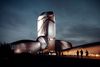
Rising from the desert in Dhahran like a sculpture shaped by wind and time, the King Abdulaziz Center for World Culture, known as Ithra, is one of Saudi’s most striking cultural landmarks. Designed by Norwegian architecture firm Snøhetta, its fluid metallic form casts an ever-changing silhouette against the horizon.
Sustainability is woven into every element of Ithra. Awarded LEED Gold certification, it was conceived as a cluster of stones leaning into one another, a symbol of unity and collaboration. The center maximizes energy efficiency and water conservation, embodying the country’s vision for environmental stewardship.
Beyond its architectural beauty and responsibility, Ithra’s true impact lies in its programming. Throughout the year it hosts exhibitions, performances, workshops and festivals that foster dialogue and cultural exchange. In the Idea Lab students, designers and engineers experiment with projects that blur the boundaries between technology and art. Its flagship annual Tanween Creativity Conference draws innovators from around the world every November, cementing Ithra’s status as a beacon for creative thought in the Gulf.
Every space within Ithra feels alive, people sketching, reading, debating, building. The enormous library houses more than 325,000 books in Arabic and English. A 900-seat theatre and 300-seat screening room host local productions and international performances, while the five-gallery museum explores Saudi identity, Islamic heritage and the story of the Arabian Peninsula. There’s also a dedicated children’s museum where interactive exhibits bring culture, science and play together for all ages. It’s a place for curiosity and connection, innovation and imagination.
Into Focus: Saudi
Into the Blue: Saudi Red Sea
Along the northwestern coast, over 90 pristine islands, coral reefs and ancient dunes are undergoing a pioneering vision. Saudi Red Sea is emerging as one of the world’s most ambitious destinations, defined by cutting-edge design, sustainable innovation and untouched natural beauty.
Can luxury tourism truly be regenerative? The first hotel to give its answer was Six Senses Southern Dunes, a retreat that opened in 2023 among sculpted sand plains, running entirely on renewables. True to the Six Senses philosophy, it blends wellness with environmental care: meditation at dawn, guided hikes in the surrounding landscape, spa rituals and meals sourced from local farms, and was the first LEED Platinum resort in Saudi. Also inland, Desert Rock delivers architectural drama, carved with consideration into the craggy sandstone cliffs and canyons.
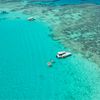
It takes a seaplane to get to the other Saudi Red Sea hideaways. Out on the uninhabited Ummahat Islands, the St. Regis Red Sea Resort is surrounded by clear turquoise waters. Its 90 villas are inspired by coral patterns and tidal rhythms. Everything revolves around the sea, with guests having direct access to world-class dive sites including the Umluj Wreck and the Ayqah Pinnacles, and the world’s fourth-largest barrier reef system.
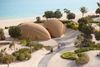
On the same archipelago, Nujuma, a Ritz-Carlton Reserve, was one of 2024’s most anticipated openings, tapping into that same sense of effortless, exploratory luxury. Activities here focus on marine-led experiences with a conservation house and state-of-the-art diving hub. Further south, Shebara stands out for its cluster of otherworldly, mirror-finish villas by Killa Design. Floating like spaceships over the water, each environmentally sensitive orb-shaped suite reflects the shifting light of the sky and sea while being powered by solar energy. Dolphin-shaped Shura Island is the centerpiece of the whole project, and there the SLS The Red Sea and The Red Sea Edition are already drawing curious travelers.
A new international airport, supported by renewable energy use, welcomes guests, many of whom will swim in clear shallows by morning and dine under a star-filled sky.
Issy von Simson is a travel writer and the former editor of Condé Nast Traveller magazine, specialising in hotels, wellness and family adventures with her four children in tow.
Hotel deals in Jeddah

Go further with the Expedia app
