
A century of open road, one stop at a time

A century of open road, one stop at a time
A century of open road, one stop at a time
A century of open road, one stop at a time
When the highway was commissioned in 1926, the job was straightforward: link rural towns to growing cities to open up opportunities for commerce and travel. 100 years later, Historic Route 66 refuses to crumble into memory. Thanks to local preservation groups and the pull of an open road, America’s most famous road trip still gets people into the car.
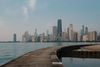
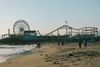
Stretching from Chicago’s soaring skyline to Santa Monica Pier, Route 66 stitches together 3,940 kilometers of deserts, plains, mountain towns, and countless tales. Many first-time travellers follow the trail of neon with detours to iconic national parks along the way. But as Route 66 celebrates its 100th anniversary, this itinerary suggests a different path. Spotlighting hidden chapters of history and local characters, the route allows flexibility and freedom only possible with a self-drive holiday.
A century of Americana
Established on November 11, 1926, Route 66 became known as The Mother Road during the 1930s Dust Bowl, when thousands migrated to California in the hope of a brighter future. Around the same time, in 1925, John D. Hertz acquired the company, trailblazing the launch of coast-to-coast rentals, making it easier than ever to travel across the country, offering another tier of freedom to wayfarers looking to get their kicks. Today, the free Hertz Gold+ program gets any Route 66 adventure off to a rolling start, with expedited pick-ups and complimentary upgrades on the newest members of the fleet. And with locations in cities and small towns along the entire route, picking up the car is never the hard part, whether the trip begins in Amarillo, Santa Fe, or off an exit ramp somewhere in between.
Route 66 hits its 100th anniversary in 2026, making this year an excellent time to get out and experience the classic Americana of neon signage, vintage motels, and roadside oddities that came to define cross-country travel in the years following the second World War. While the Interstate Highway System satisfies those looking to get from A to B, the heritage road suggests a slower, more scenic means of travel that works solo, as a couple, or with a crew.
Few landmarks better symbolise the route than a landlocked blue whale in Catoosa, Oklahoma. Built in the 1970s as a back garden swimming hole and birthday surprise, it’s now one of the most photographed oddities on the entire route, and proof that some of the best Route 66 stories come from stops nobody put on the itinerary in the first place. From there, the road angles southwest into the Texas Panhandle, where Amarillo’s own roadside legend is waiting.
Ten Cadillacs, a million stories
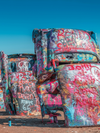
Amarillo, Texas is home to one of Route 66’s oddest landmarks. An art collective buried the 10 vintage tailfins that make up Cadillac Ranch back in 1974, ensuring no visit can ever be the same. Throw a can of spray paint in the trunk with your favourite snacks, and you’ll be able to leave your own imprint on this historic highway. Open around the clock, let this stop set the tone for the coming days as you travel at your own pace and pull over whenever a roadside curiosity catches your eye.
Amarillo’s cattle-town roots run deeper than any roadside oddity, but Cadillac Ranch has become its own kind of local landmark.
It was commissioned by a local rancher and art patron who wanted the tail fins buried nose-down, half-planted like a strange metal crop in the middle of the Panhandle. There’s no single version of the piece to photograph. Layers of paint build up and peel away by the week, names and dates disappearing under whatever the last visitor left behind, so the same 10 cars can look entirely different from one drive-by to the next. From here, the road flattens out and heads east, trading roadside art for something a little more edible at the next stop.
When you’re here, you’re halfway there
Driving The Mother Road is as much about the sights as it is getting your teeth into a story, ideally, at the same time as a slice of pie. Make a pitstop at Midpoint Café in Adrian, Texas, 1,833 kilometers west of Chicago and, you guessed it, 1,833 kilometers east of Los Angeles. Although this roadside eatery has passed through numerous hands, all owners have shared a passion to keep one of the route’s oldest continuously operating cafés afloat. Besides the memorabilia and retro charm, pie with a quirky backstory gives motorists sound reason to take the scenic route instead of hopping on Interstate 40.
Joann Harwell, the café’s pastry chef, always felt her crusts weren’t quite up to scratch compared with those of her grandmother’s. Ugly Crust Pie stuck, and these messy desserts — stuffed with the likes of peanut butter, coconut cream, and Tennessee whiskey — became the café’s unlikely signature item. The gift store supplements the café, with Route-66-themed keychains and mugs being a worthy companion long after returning the keys to your rental.
Driving the Mother Road is as much about the sights as it is about getting your teeth into a story, ideally, at the same time as a slice of pie.
A Route 66 detour worth taking
Give in to your rebellious side and follow the road north after leaving Santa Rosa. Detouring through Pecos Valley adds 161 kilometers to the journey and reveals over 12,000 years of history.
From Romeroville, the Santa Fe Loop loosely tails the old Santa Fe Railroad, passing through Tecolote, Bernal, and San Jose, along with the railroad towns of Rowe and Pecos. Stretch your legs in the Pecos National Historical Park while learning the story behind one of the longest continuously inhabited regions in the American Southwest. Continuing the drive to Glorieta Pass, wind down the windows and let the scent of ponderosa pines and piñon-juniper woodland flood the car as the mountains’ contours gently guide you toward the country’s highest (and oldest) state capital.
Established by the Spanish in 1610, Santa Fe was included in the original 1926 route before a realignment bypassed the city only a decade later. Due to strict architectural regulations, neon is superseded by adobe buildings. Dropping your rental at a hotel for the night leaves you free to stroll through Santa Fe Plaza with a stop at the historic Palace of the Governors and a couple of local galleries before sitting back with a reposado tequila cocktail.
The time before automobiles
Four hours west of Santa Fe brings you to one of the most surprising landscapes, as well as the only national park crossed by Historic Route 66. The contrast is powerful: one moment you’re cruising America’s legendary corridor, the next you’re walking among petroglyphs and fossilized trees in Arizona’s Petrified Forest. Formed over 200 million years ago, the Painted Desert’s badlands unfold in soft waves of pink, lavender, and crimson, while mineral-rich logs carry the full spectrum of the rainbow.
Brush up on history at Puerco Pueblo, a village of more than 100 rooms that peaked around 1300, when it may have been home to about 200 people. Over 800 petroglyphs are carved into the boulders below the ridge, including a spiral that catches a shaft of light for about two weeks around June 21. Farmers and traders worked this stretch of the Puerco River floodplain for generations, and their descendants in the Hopi, Zuni, and Rio Grande Pueblo communities still trace family history back to it.
When the desert gives way to the coast
Once in California, the historic route makes its way surely but steadily through an arid landscape dotted with Joshua trees and creosote bushes. As the Mojave Desert becomes a memory, the road ascends into the lush San Bernardino Mountains. Only on the clearest of days, you may be able to make out a thin blue strip of the Pacific Ocean on the horizon. The first unmistakable view of the Pacific comes as you approach Santa Monica, the end of the trail and a time for reflection.
After putting 1,931 kilometers behind you, the journey naturally concludes with sunset views, an ice cream in hand, and a selfie with the End of the Trail sign at Santa Monica Pier. The trip rewards a slower pace, and Hertz Gold+ points can stretch the rental if the road calls for more time. The best Route 66 stories are rarely found on the fastest way home.
Places to stay
Iconic Route 66 stays

British writer based in Chile. Before picking up her pen, Hannah worked as a bookseller, a book publicist, and an apple picker (in that order). Her travels have taken her jungle trekking in Sumatra, scuba diving in Malaysia, volunteering with the New Zealand Coastguard, and drinking the world’s oldest wine in Georgia.
Go further with the Expedia app
