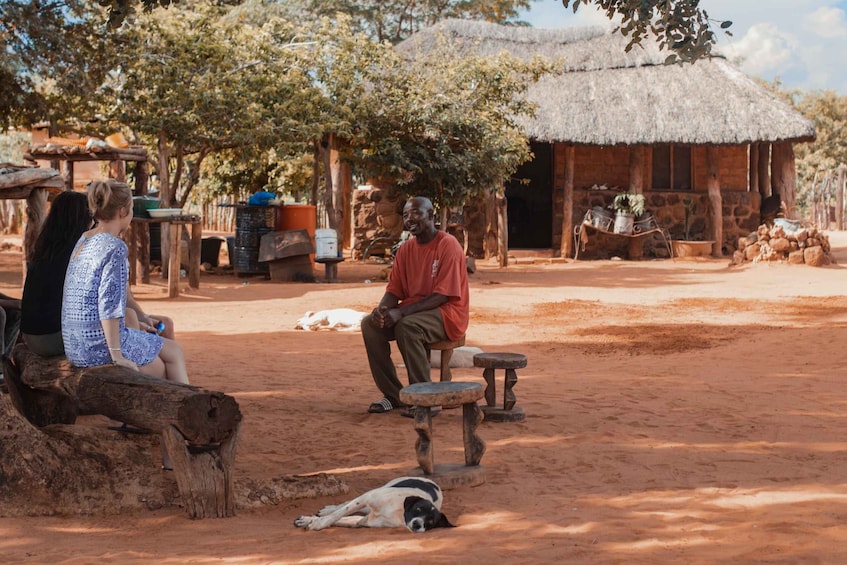
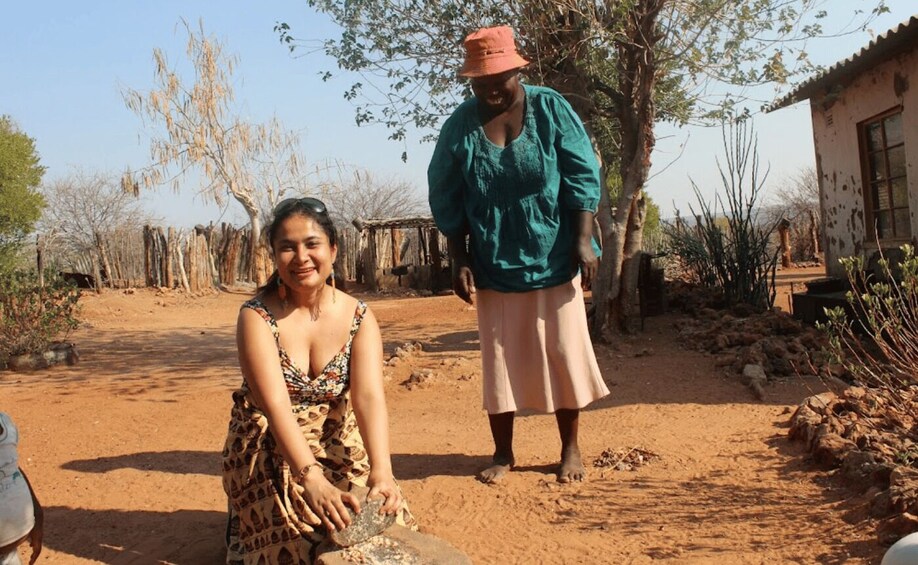
Our local guide will lead you through the village, introducing you to homesteads built from natural materials — thatched roofs, sunbaked bricks, and carefully swept courtyards. As you walk through the community, you’ll gain insight into daily life, observing how tradition and modern living exist side by side in a natural, unforced way.
From there, the experience moves into something central to village life — food.
Rather than a tasting display, you’ll head to a local food outlet where residents gather for lunch. This is not staged dining — it’s real, everyday Zimbabwean life. Sit down and enjoy a plate prepared the way locals do: warm sadza (maize meal) or millet meal served generously with slow-cooked beef stew, tender beef bones, or hearty beans. The food is simple, filling, and deeply satisfying — cooked with patience and served without pretence. Sharing this meal offers a deeper understanding of community, resilience, and the rhythms of township life.
After lunch, the journey continues to the local bottle store — a social hub in most villages. Here, conversations flow easily. Laughter rises above the hum of a nearby radio, and the atmosphere is relaxed and welcoming. This stop isn’t about spectacle; it’s about observing and absorbing everyday social life as it unfolds naturally.
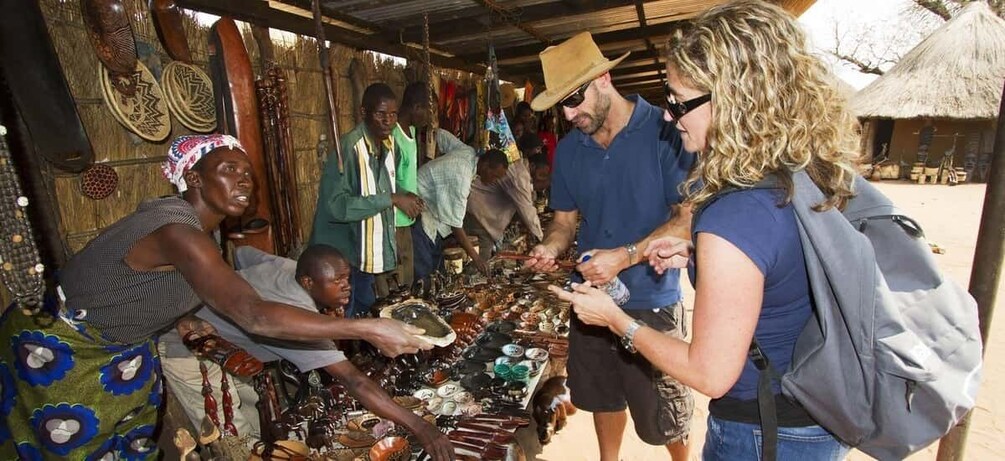
The experience then leads to the Curio Market, where local artisans informally tap into the tourism economy to sustain their families. Beneath open skies — and often near a towering baobab tree — you’ll see handcrafted carvings, beadwork, woven baskets, and other creative pieces made by hand. This visit is about understanding entrepreneurship at a grassroots level: how skill, creativity, and resourcefulness allow communities to benefit directly from tourism. Each item carries both cultural expression and economic purpose.
You’ll also encounter vendors selling baobab fruit — a local delicacy known for its tangy taste and nutritional value. Sampling it connects you not just to flavour, but to the land itself.
As the afternoon light softens, your guide gathers everyone for the short return journey. The ride back offers space for reflection. What stays with most visitors is not just what they’ve seen, but what they’ve felt — authenticity without performance. Monde does not stage culture; it lives it. Every greeting, every shared plate, every conversation is genuine.
Just as the Zambezi flows with force and grace, so too does the culture of its people — steady, resilient, and deeply rooted.