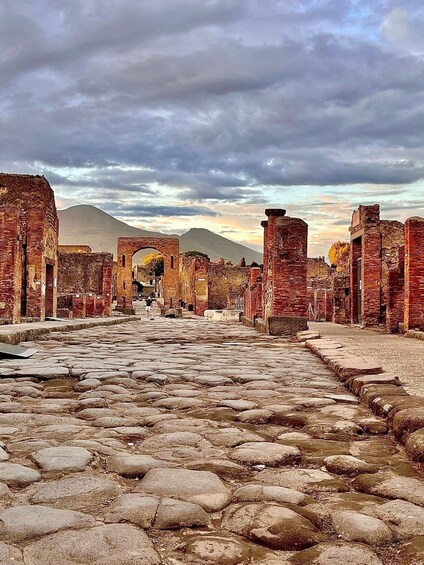
Begin with the ritual foundations of the city, exploring how sacred boundaries were traced and protected, and how religion and space were inseparable in Roman thought. Discover how the city itself was not just built — it was consecrated.
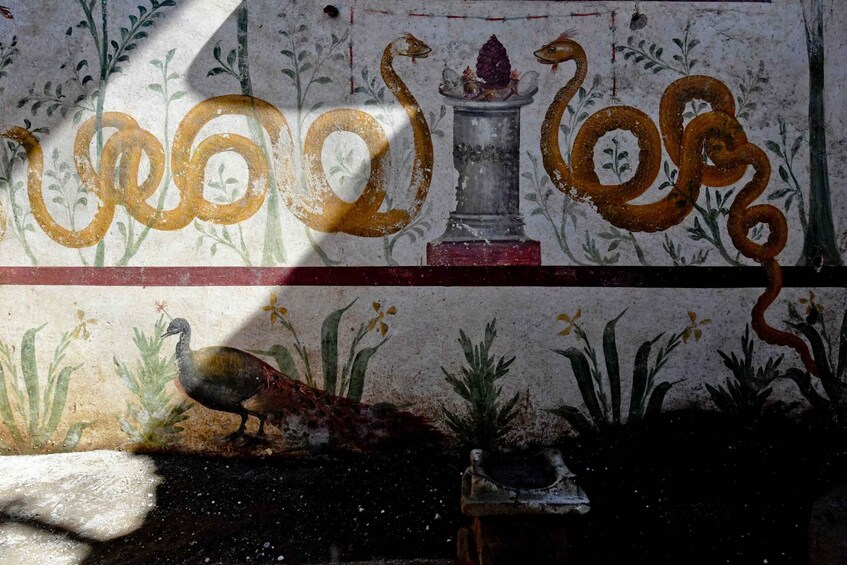
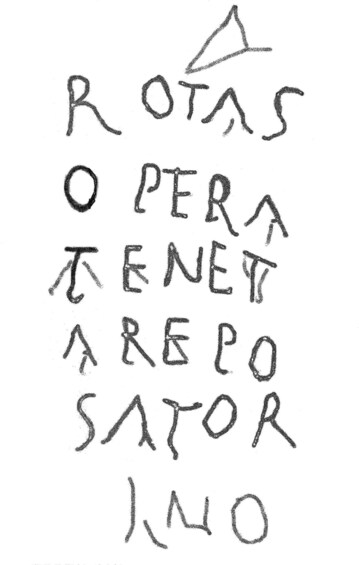
Move into the world of magic and protection. Encounter symbols, inscriptions, and subtle signs that were meant to ward off evil, attract luck, or influence fate. Some are hidden in plain sight — others are almost invisible unless you know where to look.
Explore the presence of curses and defixiones, the darker side of ancient spirituality, where words were used as tools of power. These practices reveal a Pompeii far removed from the polished image often presented to visitors.
Discover the connection between gladiators and magic. Learn how these fighters were not only admired for their strength, but also surrounded by beliefs related to protection, luck, and even supernatural power. Find out how their world was deeply intertwined with ritual and symbolism.
Enter the private sphere, where you uncover mystery cults practised inside homes — hidden devotions that coexisted with official religion. These were not public rituals, but personal, often secret paths to the divine.
Among them, the cult of Isis stands out as one of the most important and transformative spiritual traditions in Pompeii. Through her presence, explore themes of rebirth, initiation, and personal salvation — elements that made this cult deeply meaningful to its followers.
Touch on lesser-known but equally intriguing traditions, such as the cult of Sabazios, with its symbolic gestures and enigmatic rituals, and visit spaces connected to what modern scholars call the “complex of magical rites” — areas that suggest structured practices linked to ritual activity.
Throughout the tour, attention is given to hidden altars and overlooked sacred elements, often ignored by standard itineraries but essential to understanding the spiritual landscape of the city.
This is not a tour based on fantasy or speculation. Every element is grounded in archaeology, ancient sources, and careful interpretation — presented through a narrative that connects the visible and the invisible.