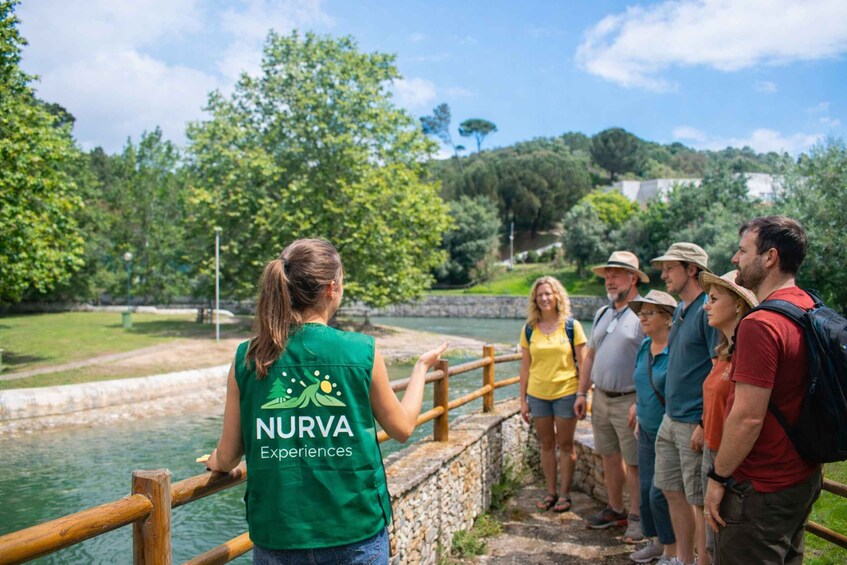
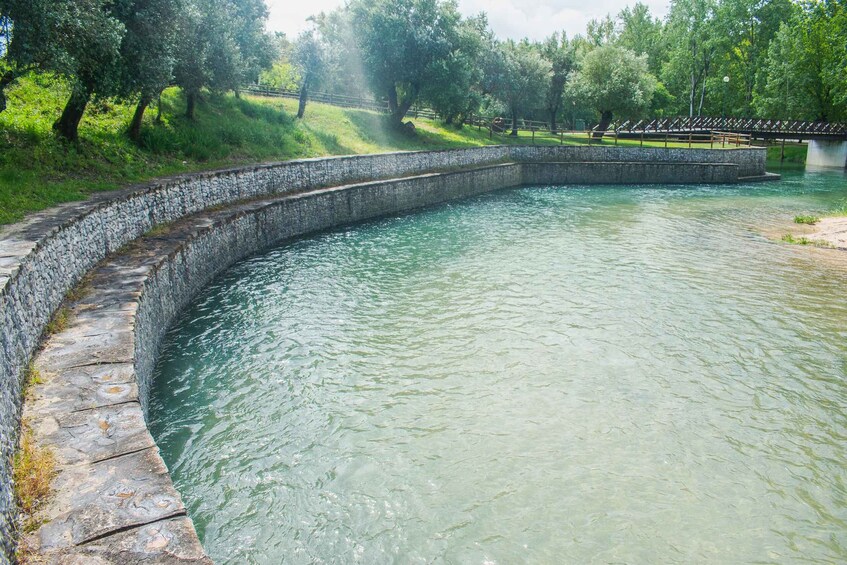
Step into one of Portugal’s most important natural water systems at the Alviela Spring (Olhos de Água do Alviela), located within the Serra de Aire e Candeeiros Natural Park. This experience combines mythology, historical relevance, and geological science in a setting that has shaped Portugal’s development for over a century.
Begin by learning about the legend of the spring. Hear the storey of a young shepherd who fell in love with a Moorish knight. Their forbidden love ended in tragedy, and the shepherd’s endless tears are said to have carved through the limestone rock, giving birth to the “Eyes of Water.” The constant flow of the spring represents her eternal sorrow. Even today, locals speak of mysterious sounds near the water on foggy evenings.
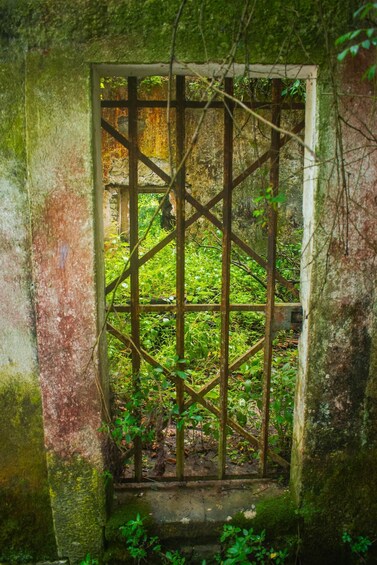
Next, learn about the historical significance of the Alviela Spring. Since the late 19th century, the waters of Alviela have contributed to Lisbon’s public water supply. In the early 20th century, the Central Elevatória dos Olhos de Água was constructed to pump water over long distances to the capital. The spring became strategically vital for urban growth and public health in Lisbon. Its hydraulic system represents an important chapter in Portugal’s engineering development. The site has long been studied and protected due to its national water importance.
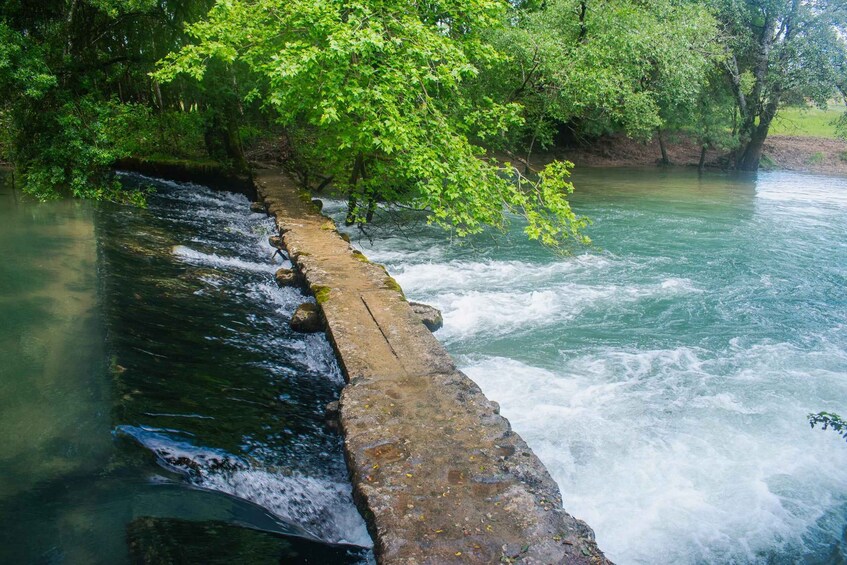
Finally, learn about the scientific importance of the Alviela Spring. The Alviela Spring is part of a complex karst aquifer system formed in limestone rock millions of years old. Rainwater infiltrates through porous limestone, travelling through underground caves and tunnels before emerging naturally filtered. The water is exceptionally pure due to this natural geological filtration. The aquifer is one of the most significant freshwater reserves in central Portugal. The spring’s flow varies dramatically depending on rainfall — during wet seasons, the discharge increases significantly. The system is interconnected with subterranean cave networks within Serra de Aire e Candeeiros. This makes the Alviela not just a scenic site — but a living geological phenomenon.