
Arrive at the hub and be welcomed by the staff. After introductions, receive essential information for your first dive. After the theoretical lesson, be given the necessary equipment to begin this unforgettable experience.
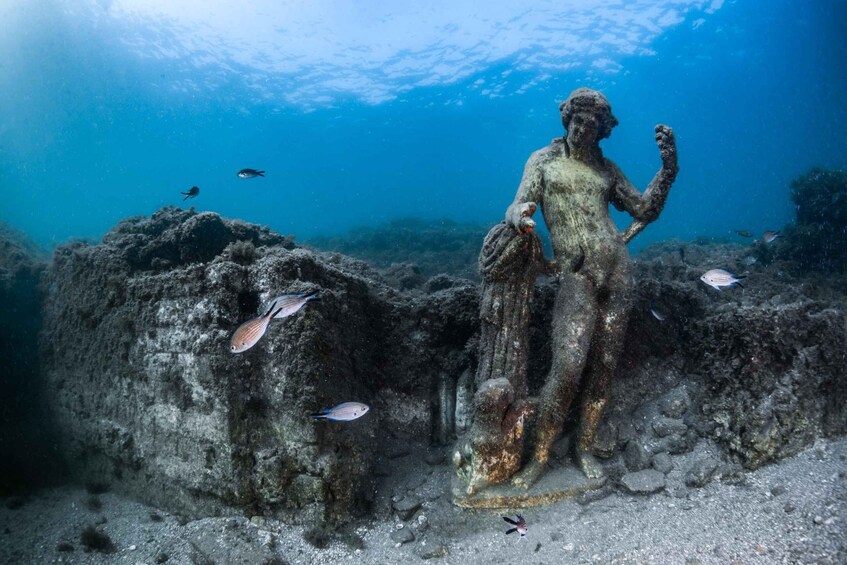
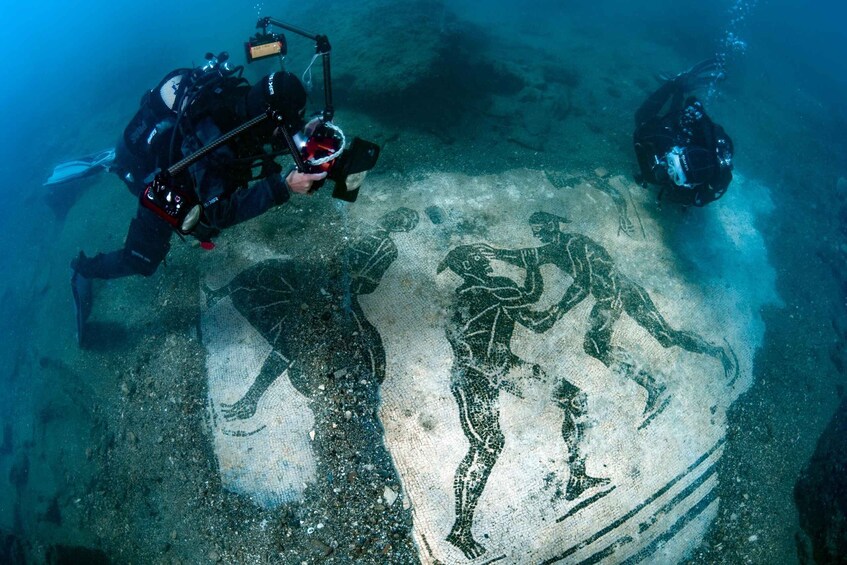
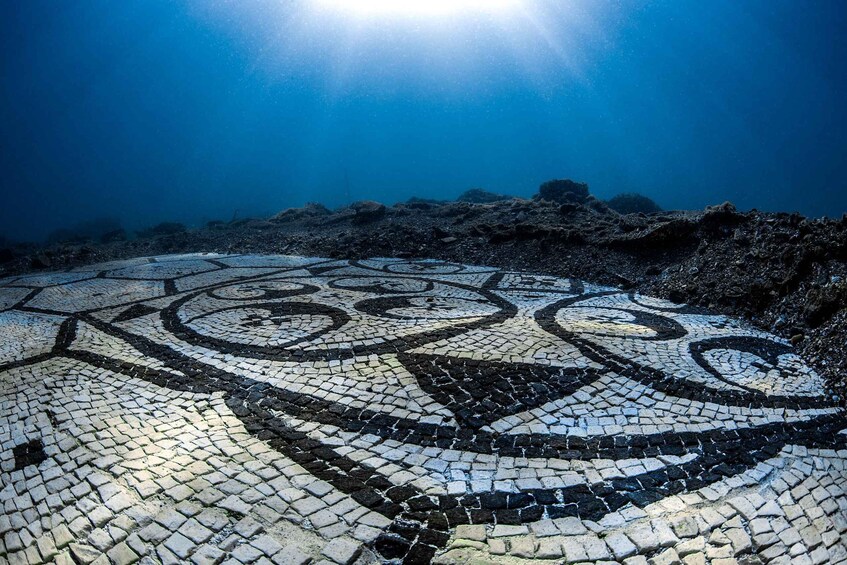
Always accompanied by an experienced instructor, dive into the waters of Baia and admire polychrome mosaics, marbles, statues, and historical artefacts of the ancient Roman people. Depending on the day, visibility, and weather conditions, you may be able to see some of these attractions:
Ninfeo Sommerso di Claudio: The Nymphaeum of Emperor Claudius lies submerged near Punta Epitaffio, in area A of the park, at a depth of about 5 metres. This building has a rectangular shape with a semicircular apse at the back and four niches on each of the long sides. Underwater, this structure is clearly visible and takes on a fascinating appearance thanks to the reconstructions of the statues that once adorned the niches. The underwater itinerary continues along a stretch of the Via Herculanea, which once led to Portus Julius. Depth: 5 metres.
Villa a Protiro - Baia: The ancient bay of Baia consisted of an enclosed basin (known as Lacus Baianus) with an entrance channel still recognisable today, alongside the remains of ancient shops and thermal complexes. Among the urban remains, those of a significant villa stand out, featuring an entrance “with a portico,” characterised by a colonnade and two long masonry benches. Depth: 5 metres.
Terme del Lacus: This thermal complex, perhaps a private residence, overlooked the old harbour of Baia, the Lacus Baianus. The site was recently discovered, restored, and opened to the public in the summer of 2020. It is impressive to observe the remains of the polychrome mosaics and marble floors. It’s interesting to note the various layers of flooring with overlapping mosaics. In addition to the outlines of several rooms and the thermal baths, three apsidal environments can also be observed, which once had large windows overlooking Lacus Baianus. Depth: 4 metres.
Porto Julius - Villa Repubblicana: This commercial port was of great importance, and its existence has been highlighted by aerial photographs taken by diver R. Bucher. These images revealed the topography of the vast port complex that extends over an area of about ten hectares. During the dive, numerous remains of floors, columns, and marble can be observed. A distinctive feature of the site is the presence of interesting mosaics. Depth: 3 metres.
Portus Julius – Percorso delle Colonne: This path is located in the area adjacent to the entrance of the ancient commercial port's channel. Its name derives from the presence of numerous remains of columns and a long colonnade, both in marble and stucco. A sequence of dozens of warehouses that served port activities can be observed. The current structures are the result of the overlapping of multiple buildings that occurred over at least 400 years. Depth: 3 metres.