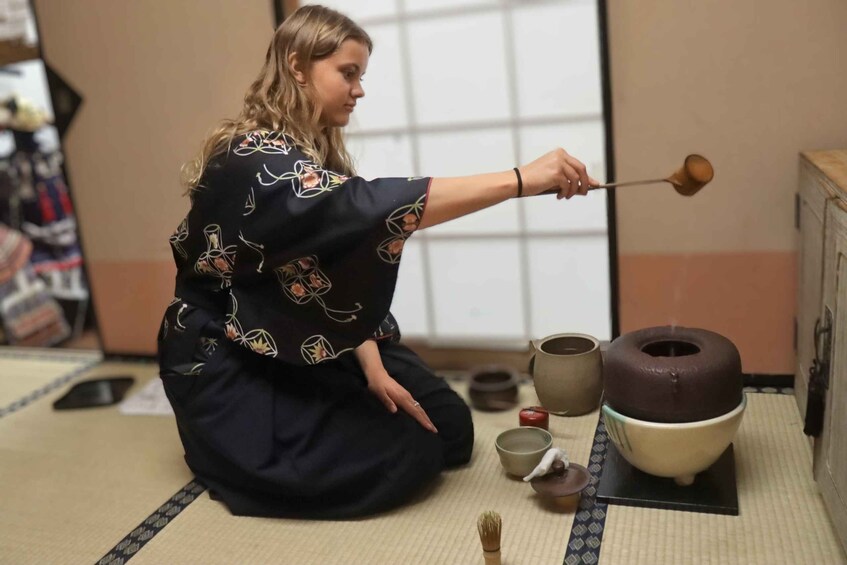
-Experience the tea ceremony as a guest (samurai)
Preparation
Zen” lives on in the traditional culture of our country, and you can expect many changes by learning the tea ceremony. Before experiencing the tea ceremony, you will be asked to change into Japanese traditional clothes.
Men will wear Hakama (traditional Japanese male dress) and Dogi (traditional Japanese robe) and become a Samurai.
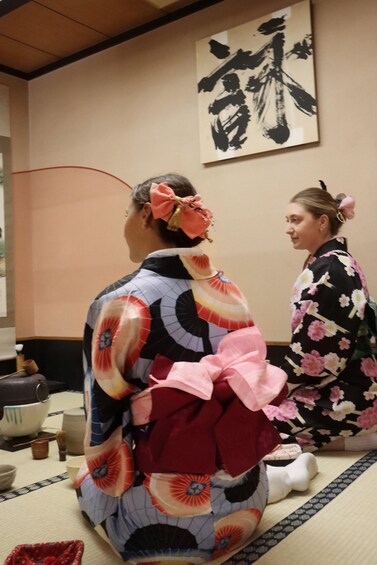
Women will be dressed in kimono and become a Yamato Nadeshiko.
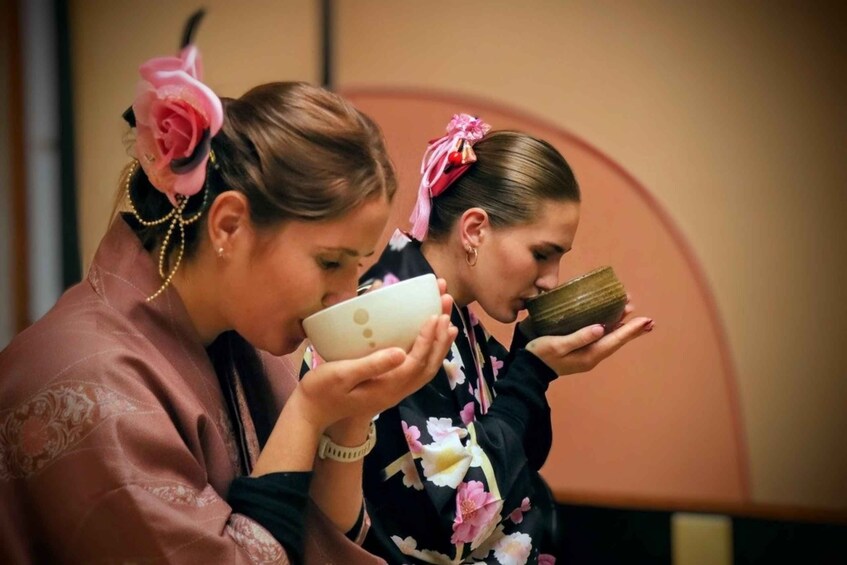
➤ The hostess will entertain the guests according to the traditional manners prescribed. The master of the tea ceremony will serve matcha (powdered green tea) and serve it to the guests.
➤ You will learn etiquette, manners, beautiful gestures, and the spirit of hospitality.
➤ Attitude
The basis of the tea ceremony is
The tea ceremony is rooted in the attitude and idea that “the master not only entertains, but the guests also respond to him or her, creating an atmosphere in which the master and the guests become one.
This is the basis of the tea ceremony.
Tea ceremony etiquette
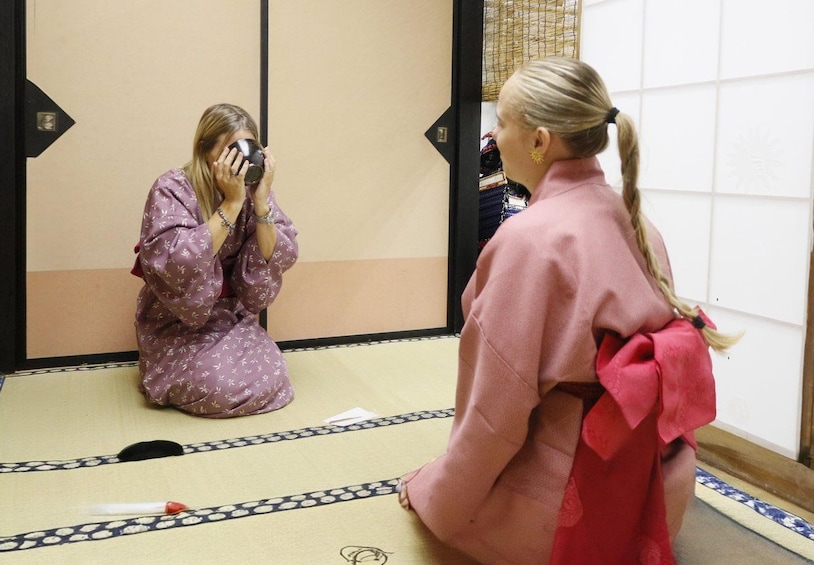
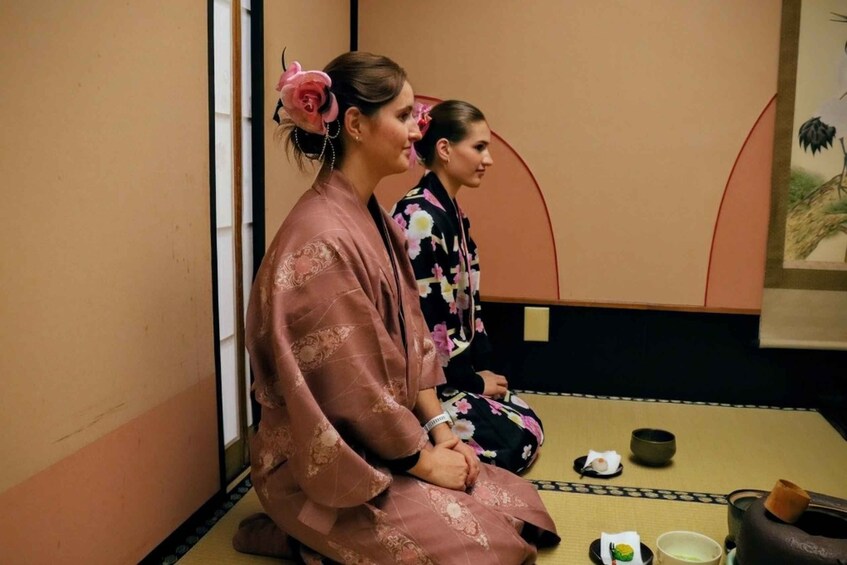
There are various rules for tea ceremony, such as how to serve tea, how to sit, how to bow, how to stand, how to walk, etc. Students learn these rules by practising them.
Once you pass through the nijiriguchi, the entrance to the tea ceremony room, everyone, regardless of nationality, age, gender, or status, is treated equally.
➤ Through wagashi, students learn about the wabi and sabi, the Japanese sense of beauty, the four seasons, etc.
-Featuring colourful designs and beautiful workmanship created by hand by craftspeople one by one.
-You can learn about Japanese history and culture.
Wagashi, which developed along with the tea ceremony in the Kamakura period, is a food unique to Japan. It is said to reflect the Japanese spirit of appreciating the four seasons and to have a beauty that is similar to that of the wabi and sabi.
Studying wagashi allows students to understand the Japanese sense of beauty through exposure to Japanese history and culture. Through making sweets, you can learn about Japanese food culture.
- “They are too beautiful to eat.
The first thing that strikes you when you are confronted with wagashi is how beautiful they look. They are filled with delicate and gentle charm that is immediately recognisable as handmade, expressing the four seasons.
-They reflect the Japanese people's love of the four seasons and their sense of beauty.
Wagashi cherish the “seasons” so much that one cannot talk about them without mentioning spring, summer, fall, and winter, and express the seasons in three elements.
➤Understand that hospitality is not a one-way street.
In chanoyu, which is the art of showing the utmost care and hospitality to guests, a high level of awareness is required of the guests as well.
As a guest invited to the tea ceremony by the master, you will be treated with hospitality and experience the profound charm of the samurai tea ceremony.