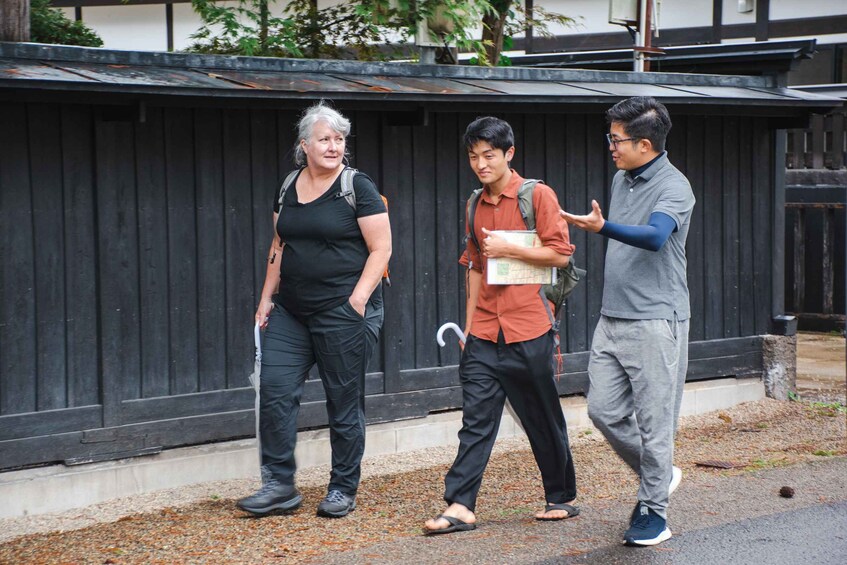
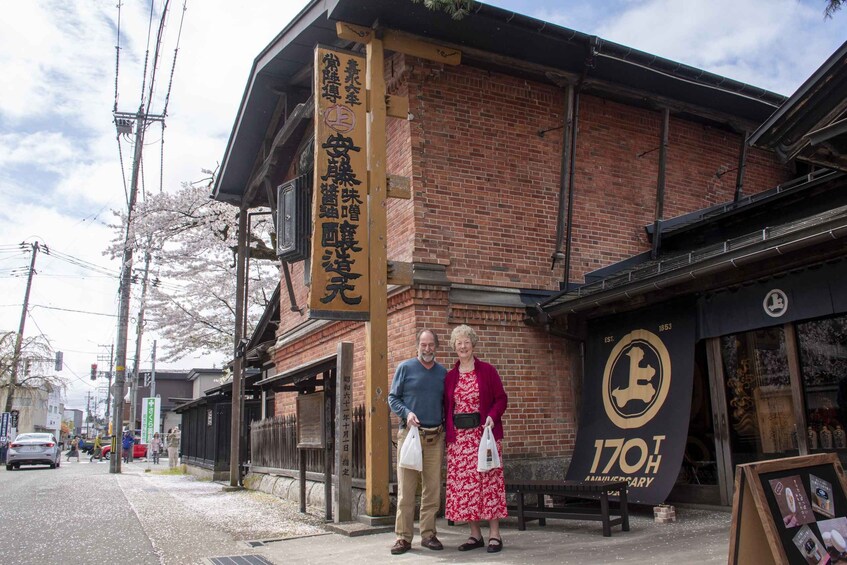
Kakunodate, a castle town that flourished in the Edo period, is called “Michinoku's Little Kyoto.” In a compact area with a radius of about 2 km, many samurai residences and other old buildings still exist, making it a popular tourist spot visited by many Japanese and foreign tourists alike, who come to enjoy the elegant townscape. The high street of the samurai residences has been designated as a National Important Preservation District for Groups of Traditional Buildings and is protected as a cultural asset.
The tour will go through Samurai Street and other shops that have significance to the Japanese culture.
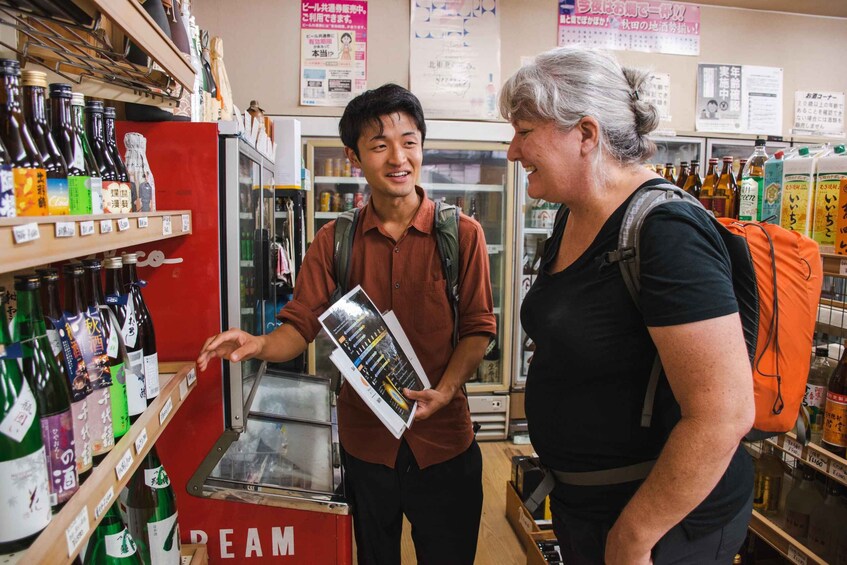
Local Sake Fujita
Akita Prefecture is well known for the rich collection of Japanese sake. Here at Fujita, you will be able to try 3 different types of Japanese sake through the sake tasting experience. Fujita has various Japanese sake brands originating from Akita Prefecture that can only be bought in the region.
Ando Brewery
Kakunodate is divided into an inner town with samurai residences and an outer town with rows of merchant houses. Ando Brewery is located in the outer town. Since the end of World War II, Ando Brewery has specialised in the production of miso, soya sauce, and pickles, and has continued to preserve the traditional flavours that have been handed down from generation to generation. The main store was rebuilt in 1883 and retains its original appearance.
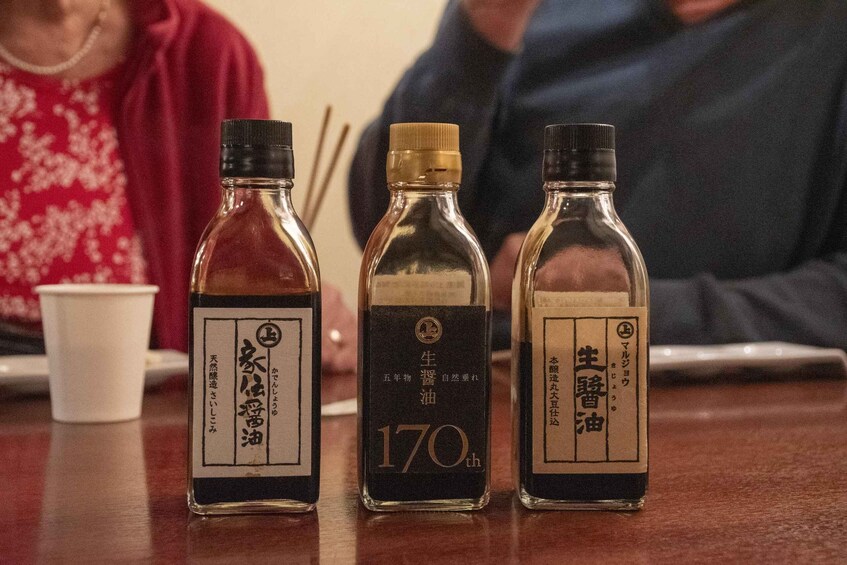
On this tour, you will enjoy a tasting of miso and pickles and a taste comparison of three different types of soya sauce. You can choose from soya sauce ice cream or miso macaron, a speciality produced here in Ando Brewery.
Goto Fukushindo
In the back street of Samurai street lies Goto Fukushindo, a traditional Japanese sweet shop running for more than 140 years. You can try manju, dorayaki and other mochi sweets that are the local’s favourite.
Iwahashi Family Manor
A mid-level samurai family, the Iwahashi family (middle class samurais) were chief retainers of the Ashina clan, the rulers of Kakunodate from 1603 until 1653. After the Ashina clan ceased to exist, the Iwahashi family served the North Satake clan, who ruled Kakunodate from the 1650s until the feudal domain system was abolished in 1871.
The Iwahashi manor house, was remodeled in the late Edo period. The roof was originally thatched, but was changed to its current shingled style during a subsequent remodeling.
Samurai Manor Teahouse
Across the street from Aoyagi Samurai Manor, the Samurai Street Teahouse offers Akita local dishes and sweets. You will be able to try the kiritanpo, an Akita classic that is usually only made at home.
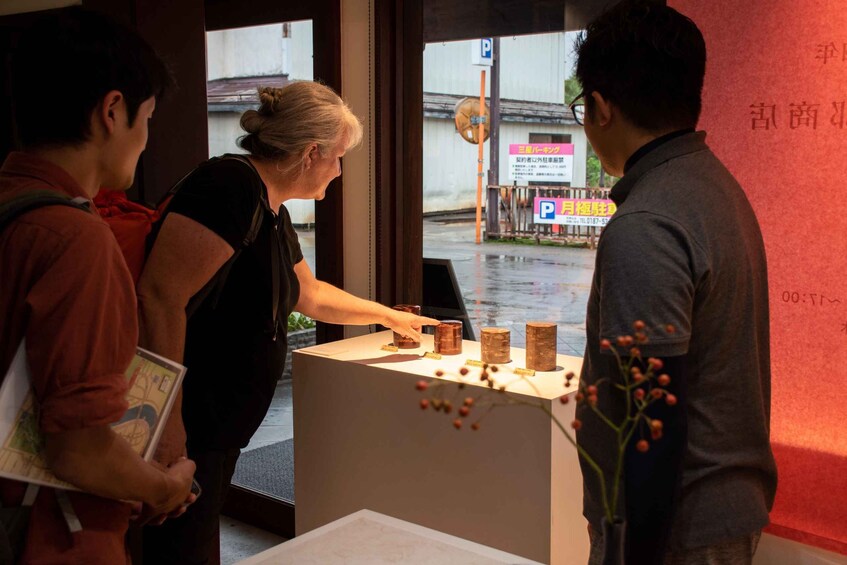
Kaba-zaiku Centre
Kaba-zaiku is a craft made from the bark of mountain cherry trees. During the Edo period (1603 to 1867), kabazaiku developed as a handcraft for low-ranked samurai, with an uncompromising one-of-a-kind style.
This will be the final destination of the tour.