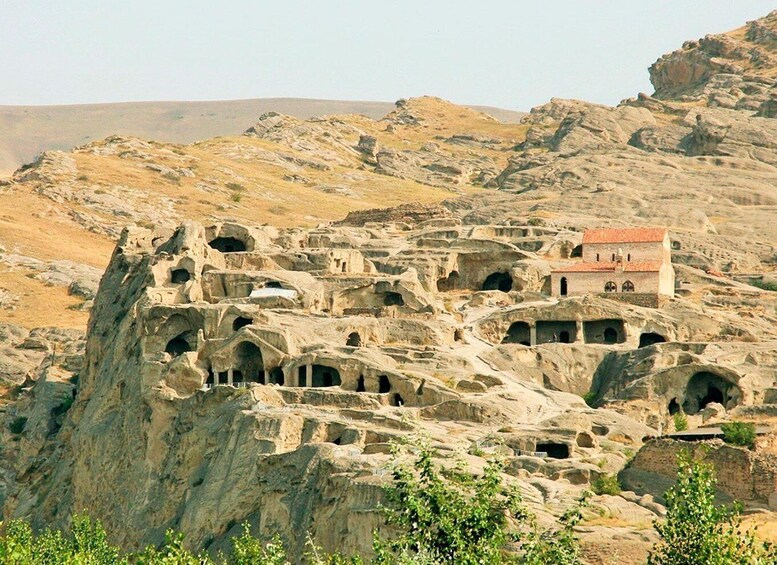
Begin your journey with a visit to Uplistsikhe, an ancient pagan centre that was once a major political, economic, and religious hub in the pre-Christian era. Explore the rock-cut architecture, a unique combination of cave structures in Anatolian and Iranian styles. Carved into the soft sandstone cliffs, these caves house dwellings, ceremonial halls, wineries, pharmacies, prisons, and other structures.
Discover the three main zones of Uplistsikhe: lower, central, and upper. The central part is the largest and contains the majority of surviving structures. With the adoption of Christianity, new buildings appeared in Uplistsikhe, including a 10th-century stone church that stands at the highest point of the town. Since 2007, Uplistsikhe has been included on the tentative list of UNESCO World Heritage Sites.
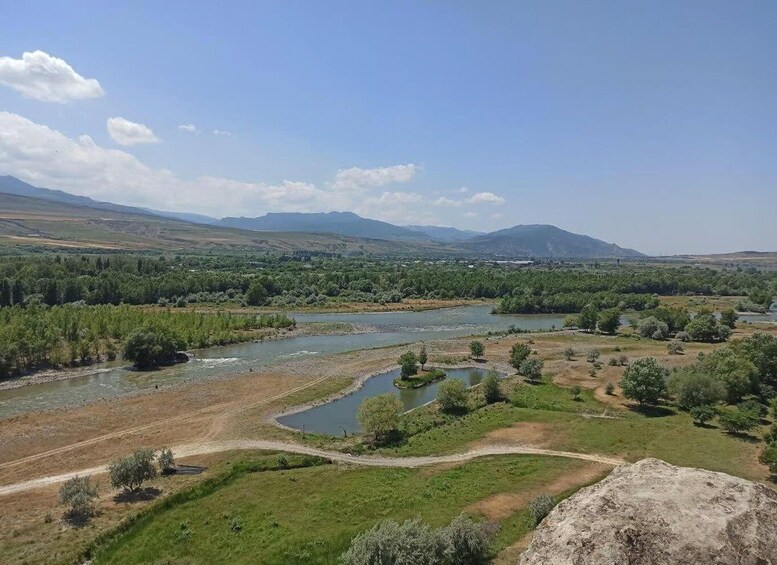
Walk along rock-cut streets and explore preserved chambers such as the Hall of Queen Tamar, a pagan temple, an amphitheatre, and a wine cellar. From the highest points of the town, enjoy panoramic views of the Kura River valley. At the entrance to the complex, visit a small museum to learn more about the history of the town and see artefacts found during excavations.
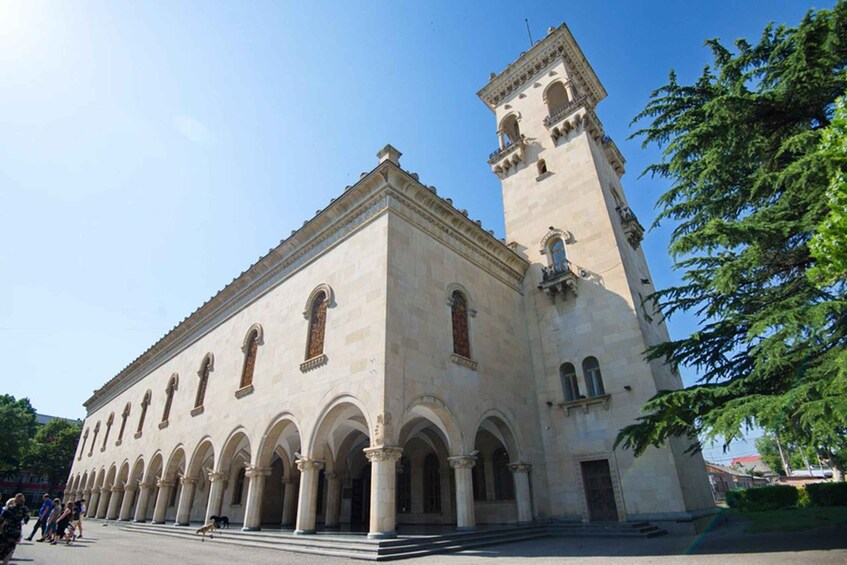
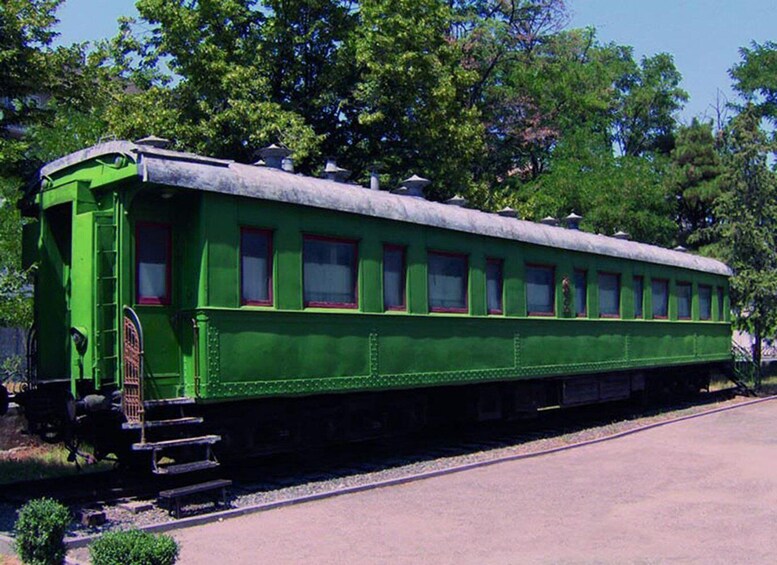
Next, head to the Stalin Museum, officially named the Ioseb Stalin State Museum, located in Gori, Georgia, which is Joseph Stalin's birthplace. The complex consists of three parts: Stalin's birth house, the main exhibition building, and Stalin's personal railway carriage.
Finally, visit Mtskheta, one of the oldest cities in Georgia, at the confluence of the Aragvi and Kura rivers. As the first capital of the Georgian state of Iberia from the 4th century BC to the 5th century AD, it is considered the spiritual centre of the country. Mtskheta's historical monuments are included in the UNESCO World Heritage List.
See the Svetitskhoveli Cathedral, the main cathedral of Mtskheta, built in the 11th century on the site of the first Christian church in Georgia. It houses one of the greatest Christian relics—the Tunic of the Lord. Visit Jvari Monastery, situated on a mountaintop, this 6th-century monastery is one of the most significant monuments of Georgian architecture. It offers stunning views of Mtskheta and the confluence of the two rivers.
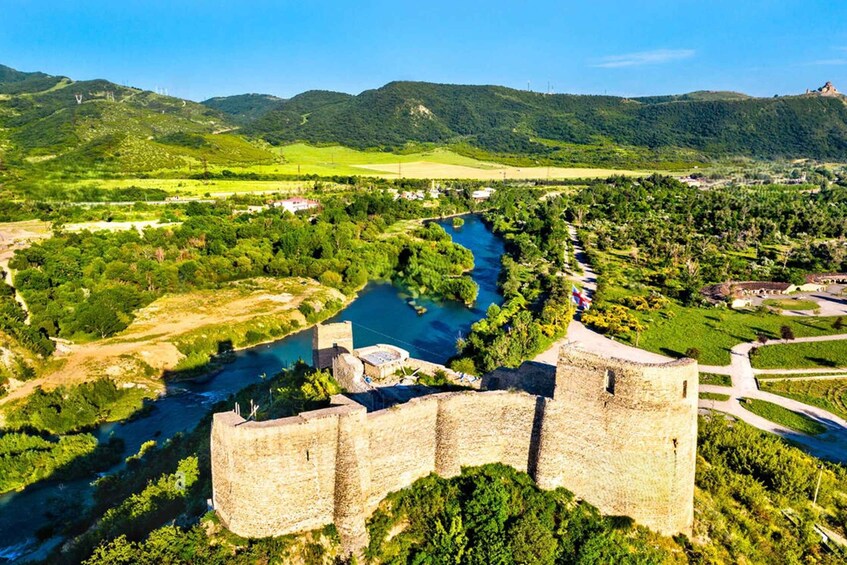
Finally, see the ruins of a 9th-century fortress, Bebris Tsikhe Fortress, which offer picturesque views of the surrounding area.